



One of my favorite homeschooling memories is wrapping up a semester of Botany by taking a scenic scavenger-hunt hike with two other families whose children were close in age to ours as part of a simple homeschool co-op we created. This informal, low-cost concept of sharing educational experiences with a few close friends is the original homeschool “co-op” model that has stood the test of time.
While the rise of state-funded vouchers and government-backed homeschool enrichment programs has parents questioning where to seek community learning, I can tell you from experience that true educational excellence doesn’t require formalized programs or state assistance — just a few dedicated homeschooling parents and a shared goal.
In our first year of homeschooling, the local homeschool support group we joined hosted a weekly academic co-op that we could choose to participate in. Because my eldest two daughters were transitioning from a private school, I was very thankful to have this option to help them adjust to homeschooling. Through our weekly co-op, the girls shared classes on art, music, writing, and geography with other elementary-age children in our homeschool group. Plus, we all made good friends — I think I enjoyed that part the most!
 However, our homeschool group grew significantly that year, and it wasn’t feasible to continue the weekly co-op without formalizing the program and securing a lot more volunteer help from parents. So we spent that second year homeschooling independently, adding a couple of private Christian enrichment classes customized for homeschoolers to our weekly schedule.
We enjoyed these new programs, but I did miss the parental participation and consistency we experienced in that first year of cooperative education. So I started an informal co-op of my own: First, I launched a tween girls’ book club, which grew to eight participating families, and two years later, our group developed into a mission-minded moms-and-daughters group that combined literature and geography studies with hands-on projects supporting ministries around the globe. During that time, we also started the Botany co-op with just two other families.
Not only did these two simple co-ops meet our family’s changing needs without adding the complexity of a formal, classroom-driven co-op, but they also allowed other participating families to do the same. The friendships we built by learning alongside like-minded families through these (and a few other) simple homeschool co-ops have also endured. We are still close to our Botany co-op families, even though one moved out of state before we were done homeschooling. We travel to visit one another, encourage each other through a moms group chat, and our daughters have been in each other’s weddings!
As iron sharpens iron, so a man sharpens the countenance of his friend (Proverbs 27:17 NKJV).
Five Steps to Simple Homeschool Co-ops
If the idea of starting or participating in an informal, parent-led homeschool co-op sounds complicated or overwhelming, I’ll be the first to tell you it doesn’t have to be! Follow these five steps to take the complexity out of starting or seeking out a family-run homeschool co-op:
1) Start with your homeschool mission. The most important thing you can do as a homeschooling parent is establish a clear mission statement and stick to it! When it comes time to evaluate participation in any outside options, your mission statement will help guide you toward activities that align with your mission rather than taking focus away from it. If you don’t have a homeschool mission statement, this blog post will walk you through it.
2) Find a few friends with common goals. You don’t need a large group to experience the benefits of cooperative education. In fact, I think that larger groups can make it harder to follow Priority No. 1: Your personal homeschool mission. In our first semester of girls’ book club, we had about 30 moms and daughters participating — and it wasn’t easy! We had a lot of fun together, but we also learned a lot about what we did and didn’t need to enhance our daughters’ educational experience.
 3) Choose a common theme or curriculum. For our girls’ book club, we chose classic books such as The Little House series by Laura Ingalls Wilder and The Chronicles of Narnia by C.S. Lewis, making it very easy to find existing unit study resources online for our co-op to use to discuss and expand upon these timeless literary works. For our Botany co-op, we selected Apologia’s Exploring Creation With Botany, which includes a student notebook and plenty of projects for our little group to complete together. The bottom line: You don’t have to purchase special “co-op” teaching materials or a big package to have a successful learning experience with your group!
4) Find a time to meet regularly and keep it flexible. Our book club met twice a month on Wednesday afternoons to give the girls time to complete their reading and make it easier for families to participate without a weekly commitment. This also gave us an easy backup option if a meeting had to be canceled: We could just move it to the next open Wednesday. We met weekly with our Botany co-op, but we also had a backup day in place that worked for the three participating families. Keeping your co-op small also makes it easier to adjust your meeting schedule when necessary, since you don’t have to align too many schedules. Being able to meet regularly without putting a strain on your existing weekly homeschool flow is important: You don’t want the co-op to burn you out or take away from what you’re trying to accomplish with your children at home.
5) Enjoy the accountability and fellowship. Although your first instinct may be to cover academic subjects you think you “need” a co-op for (such as science, foreign languages, or art), there are many other benefits to participating in cooperative education that are just as important. It’s helpful to have the accountability that comes with frequent meetings to stay on pace with your co-op’s lesson schedule. Some homeschooling moms have no problem following their lesson plans independently, but I enjoyed the nudge of knowing we needed to stay on track for our co-op.
Simple Homeschool Co-ops Create Support to Stay the Course
Although the simple homeschool co-ops we participated in throughout our homeschooling years met practical academic goals, the fellowship with other homeschooling families is a key reason we continued to participate in co-ops. 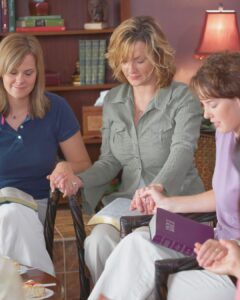 Your homeschooling journey doesn’t have to be a lonely one, and you don’t need a structured enrichment program to make sure that doesn’t happen. You have the opportunity to build a support community to stay the course by partnering with like-minded families and strengthening relationships with other followers of Christ.
And they continued steadfastly in the apostles’ doctrine and fellowship, in the breaking of bread, and in prayers (Acts 2:42 NKJV).
Whether you live in an area with large, formal homeschool support groups or need to do some footwork to connect with other homeschoolers, initiating consistent fellowship with just one or two homeschooling families will keep you energized and encouraged. A simple, parent-led homeschool co-op with just a little structure is still the best way to incorporate learning and fellowship with purpose.
Dive Deeper
- On the CHEC Blog: You Can Homeschool on a Budget Without Government Funding
- On the Colorado Homeschool Podcast: Finding the Right Homeschool Group for YOU!
- On CHEC.org: FREE download & additional resources to connect with the Colorado homeschool community
Do you participate in any homeschool co-ops? If so, is it a large, organized co-op or a smaller, informal one? What do you enjoy most about it? What are the challenges? If not, what questions or concerns do you have about co-op schooling? Let us know in the comments below.

About the Author: Renée Gotcher
Renée Gotcher is the Communications Coordinator at CHEC, as well as a freelance writer, editor, and recently “retired” homeschooling mother of three daughters (two are also college graduates and the youngest attends BJU). Renée and her husband of 31 years, Kenny, are next-generation homeschoolers who were homeschooled in the late 1980s and began homeschooling in 2010. Soon after, Renée launched a homeschooling blog, NextGenHomeschool.com, and actively supported the local homeschool community through various leadership roles for 14 years. She recently contributed to Proverbs 31 Ministries’ Encouragement for Today devotional series and writes monthly devotionals for the Daybreak Devotions series on Crossmap.com and her personal blog, The Pace of Grace.
0 Comments