



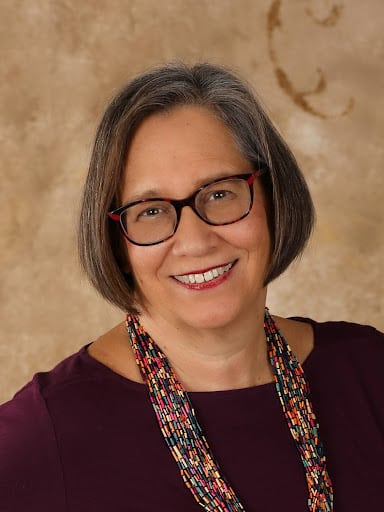
by Shari McMinn
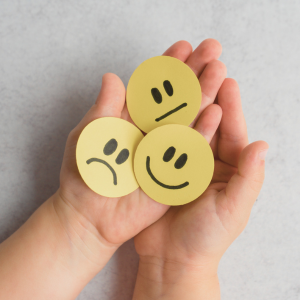
Known by the acronym SEL, social-emotional learning is a popular topic amongst professional educators who administer or teach in institutional schools. This is the definition of SEL from the United Nations Educational, Scientific, and Cultural Organization (UNESCO):
“Social and emotional learning (SEL) is the process of acquiring the competencies to recognize and manage emotions, develop care and concern for others, establish positive relationships, make responsible decisions, and handle challenging situations effectively. In other words, it is the holistic process of learning grounded in ethics of care. It combines cognitive, social, emotional, and relational aspects of learning to enhance learners’ well-being, academic success, and active global citizenship, promoting positive social change.”[1]
Social Emotional Learning in Schools
If you recently began homeschooling and your student(s) previously attended an institutional school, he or she has probably been instructed through this type of ideological lens. If you have only homeschooled your student(s), your son or daughter might have been exposed to this during enrichment activities provided outside your home. In Colorado, this is particularly true if your family participates in “homeschool” programs provided through the government school (taxpayer-funded) system. Therefore, this discussion of SEL’s effect on homeschooled Unique Learners will be beneficial to most of our readers.
 I humbly suggest that the need for SEL methodology during instruction in a classroom setting is due to today’s parents not fulfilling important aspects of child training at home. Today’s parents often lack the ability to help their children gain — which the parents possibly don’t possess for themselves — fully developed social skills and emotional self-governance based on their made-in-the-image-of-God identity. Hence, private, public, and even Christian schools now address this developmental gap through programming and practice (which, sadly, often contradicts God’s Sovereign Will for mankind).
Increasingly, this focus usually takes time away from classroom reading, writing, and arithmetic. Those three core subjects are the foundation — typically taught to mastery level in the elementary years — for a well-developed knowledge, which must now be obtained during the teen and young adult years. No wonder standardized test scores in schools have plummeted in the early part of this century. Basic subjects are not taught enough because of time spent for social-emotional learning in classrooms!
There is an adage that goes like this, “Teach your child about the world, or the world will teach your child.” This has never been truer in our current social media-obsessed society, where everything is turned upside down, especially concerning gender (sex), marriage, and what makes human beings truly happy and content. “Social Emotional Learning,” as taught in institutional schools, includes teaching children beginning in preschool that a child can change their gender from what is “assigned at birth.” In “literature” read aloud in classrooms to even the youngest non-readers, all forms of sexual relationships are taught as acceptable as long as one feels “good” about their “authentic” self and their related choices.
Further, students are often taught by words or examples that they can disrespect authority they disagree with, break rules (including laws) they believe are “unfair,” and get their own way if they tantrum or protest loudly and long enough. In sports, if they don’t make the “A” team, they receive participation trophies for, well, participating, no matter how poorly they perform. This is social emotional chaos!
None of these strategies helps children understand their own God-created image identity and the God-given jurisdictions of authority (parents, church, magistrate). Nor does this type of instruction encourage students of all ages to strive to do their best, help them realize their own personal strengths and weaknesses, or encourage them to seek out what hobbies or work in life are a good “fit.”
Biblical Social Emotional Learning
The Word of God, the Holy Bible, teaches something quite different. Academic and physical talents are God-given abilities and interests to develop. God-given emotions are to be controlled, and social skills are to be gained for the greater good of His Kingdom.
In both the Old and New Testaments, we read that each of us is created in the image of God, “Imago Dei,” and we are individually to obey His Commandments as found in the Old Testament, which the life of Jesus Christ fulfilled in the New Testament. We are to give up our lives for our LORD, taking up our cross daily to follow Christ (Luke 9:23).
This Scripture passage further explains our social-emotional image as followers of Jesus Christ:
Now this I say and testify in the Lord, that you must no longer walk as the Gentiles do, in the futility of their minds. They are darkened in their understanding, alienated from the life of God because of the ignorance that is in them, due to their hardness of heart. They have become callous and have given themselves up to sensuality, greedy to practice every kind of impurity. But that is not the way you learned Christ! — assuming that you have heard about Him and were taught in Him, as the truth is in Jesus, to put off your old self, which belongs to your former manner of life and is corrupt through deceitful desires, and to be renewed in the spirit of your minds, and to put on the new self, created after the likeness of God in true righteousness and holiness. (Ephesians 4:17-24 ESV)
Does My Unique Learner Need SEL?
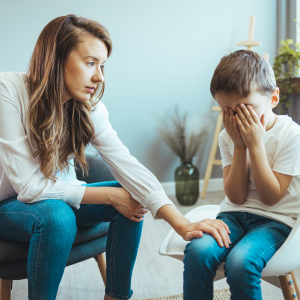
Yes! All of our children need to be taught social skills for developing healthy relationships with family members, friends, and even strangers in their church or extracurricular communities. Each of our children needs to learn to self-govern their emotions, which lead to their actions, either good or bad.
 If we don’t teach them character, self-control, and the fruits of the Holy Spirit (Galatians 5:22-23), we cripple them to live in their “old self,” sinful ways, instead of renewing their minds and hearts to live in their “new self” with the hope of true righteousness and holiness as Jesus Christ modeled. That is what God desires for all humans so we may flourish.
Often, our unique learners are the most vulnerable in society. They are easily confused by the world’s messaging about their identity, especially their human sexuality. We need to give them a firm foundation from an early age with God’s biblical messaging instead. They are created in His image, for His purposes, for a relationship with Him, for His glory. With that, they can become truly happy and content in this life despite their struggles now and into their future years as adults. Bless them, and in turn bless yourself, with this type of social-emotional teaching in your homeschool!
God’s SEL Standards
Love, joy, peace, patience, kindness, goodness, gentleness, and self-control are what our children need to learn from us, their own parents — taught and modeled daily in our family homeschools. Whether your child is highly gifted, physically handicapped, labeled with “special needs” learning issues (diagnosed or not), or just a neuro-typical kid, God’s plan for social-emotional learning is to live as Jesus Christ, filled with the Holy Spirit to bear good fruit, and fellowship with Father God forever because his or her sins were nailed to the cross! Do you believe that? Are you teaching and modeling that? Does your child comprehend it?
 This type of social-emotional learning can not be outsourced to a Christian, private, or public school “homeschool program.” Nor is it the responsibility of Sunday School teachers or church leadership — though they certainly can reinforce these as they disciple your family each week through regular church attendance. No, God’s plan for SEL is taught AT HOME in the context of Bible devotions, family meals, personal chores, and school work that is often hard and filled with drudgery.
Because, as adults, we too need this type of ongoing “continuing education” in our lives, which are often hard and filled with drudgery! God wants our emotions and social interactions to be Christ-focused, biblically supported, and under His authority, whether we are aged 8 or 68!
Dive Deeper With These Additional Resources
For more information on God’s SEL based on our “Imago Dei” human identity, I encourage you to pursue further learning about this topic by checking out these links:
- Celebrate Kids podcast: When Private Beliefs Turn Public: The Importance of Character and Courage Amid Crisis [NOTE: this podcast is for adults (not children) because it includes discussion of recent mass murder attacks by gender-confused people]
- Center for Biblical Unity article on Social Emotional Learning
- Desiring God article by John Piper: The Image of God”
- Liberty Sentinel’s article on SEL in the Classroom
- Generations’ “Teach Me the Faith” Scripture memory resources with FREE weekly family audios
- Raising Them Up podcast: Teen Defiance, Demanding Toddlers, and Homeschool Sheltering
- Rocky Mountain Homeschool Conference: Registration is now open with early bird discounts! [NOTE: A Bonus Day on Wednesday, June 10, is FREE and includes an afternoon Unique Learners Workshop Seminar (3 sessions) with a meet-up following. The full conference also has a Unique Learner Workshop Track for further encouragement and practical help. SPECIAL OPPORTUNITY: A few Unique Learner Cognitive Assessments slots are still available and are low-cost, by qualified evaluators.]
For more information that will support you and your unique learner, go to CHEC’s Unique Learners webpage.
My next Unique Learner blog, “Spring Fever — Everyone Needs to Get Outside More,” will be posted on April 11, 2026 (the 2nd Wednesday).
Shari McMinn, your trusted homeschooling friend
P.S. If you have a topic I should write about, please email me with your suggestion(s). This blog is for you!
[1]https://www.unesco.org/en/articles/what-you-need-know-about-social-and-emotional-learning. Accessed 2.27.2026A
0 Comments