




by Shari McMinn
With the new year, many families — for a variety of reasons — are beginning a whole new lifestyle with their first attempt at homeschooling. This may include you and your student with unique learning needs. Whether from government-funded or private schools, caring parents are bringing their students home for what they hope is a better educational experience.
Jesus said, “Let the little children come to me and do not hinder them, for to such belongs the kingdom of heaven.” (Matthew 19:14)
I salute these brave families who are jumping in mid-stream, mid-year. Some 30 years ago, our family did the same thing when my second-oldest son was floundering in our local public school with undiagnosed learning delays. Little did we know the wonderful blessings that decision would have on our lives! We learned a few things with that monumental change, which might be helpful for you and your family if one or more of your students are “coming home” to school this winter. I suggest you consider the following seven steps for success.
1. Educate Yourself as the Homeschool Parent
 Start by reading this CHEC.org webpage about beginning to homeschool mid-year. Research how to begin homeschooling in Colorado in order to comply with our state’s statutes (the law). The CHEC Independent School accepts mid-year applications and is an affordable, popular “umbrella” school. Legally withdraw your student from school so you are not accused of truancy. Before you purchase any curriculum, learn about the basic homeschool methodologies. Observe your student and consider the way in which he or she best absorbs information; this is your child’s learning style. Consider how you like to do and teach things; this is your teaching style. Network with other parents in your church or neighborhood who share your values to find out what they do for homeschooling their children.
2. Obtain Previous School Records
Be sure to obtain your student’s complete records from the school he or she was previously enrolled in. This is your legal right. If your student was labeled “special needs” and had an Individual Education Plan (IEP), that documentation needs to be given to you. These records become your “baseline” for where your student began his or her homeschool journey. Understand Colorado’s requirements for year-end testing or evaluation and reporting so you are prepared to record your student’s progress from their baseline and submit as required.
3. Remember, Homeschool Takes Place at Home
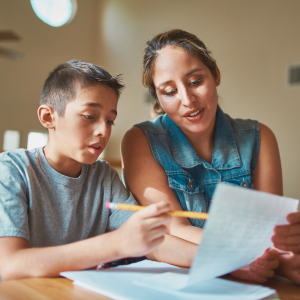 It’s easy to fall into the trap of “carschooling.” Akin to the stereotypical “soccer mom,” you will be tempted to enroll your student in an important opportunity or exciting group class so they will supposedly learn more and have a social life. However, I recommend you stay home more than you go out. Instead, find a homeschool support group near you for field trips and family social connections. Don’t be tempted to register for more than that, at least this first spring as you begin homeschooling. This slower “stay-at-home” pace of life is helpful for students with unique learning needs who may require more time to process what is being learned, need frequent breaks and more restful time, and therapeutic or tutorial services, which your schedule needs to allow for.
4. Your Family’s Homeschool Will Be Unique
Another temptation will be to homeschool just like your sister, neighbor, best friend, or church buddy does. Don’t replicate what they have. Learn from them, but don’t feel pressured to do exactly the same. Your family is unique. You each have personal interests, your own (tight?) family budget, and your preferred way of doing things. The beauty of homeschooling is that each family finds their own way, their own “groove,” so to speak.
It takes time to develop this. It may change as your child grows older, maybe as you add more children to your family. Influencers on social media are not you. You are you; your family is your family. Therefore, your homeschool is your homeschool. Seek the Lord to show you the way to develop your homeschool plan as the teaching parent for educating your children in His ways. He created your child uniquely and can lead you to the best way to love and educate him or her.
5. Relationships Are Foundational to Learning
 Some parents avoid homeschooling because they don’t get along with their child(ren). That should be a signal to parents to work on relationships, first and foremost. Your child will not learn — and you will not be able to teach — if the two of you don’t respect each other, aren’t able to communicate, and can’t find things in common to enjoy doing together. Go to your student and repent of any sin that caused problems in your relationship with him or her. Model grace, forgiveness, and lovingkindness to your daughter or son like Jesus would. God can restore broken relationships; seek Him for that.
Your parent-child relationship is more important than your friend relationships, second only to your marriage relationship. Make it meaningful. Go deep with it. Work on it every day. Have fun together! This will enable you to teach your child well, and he or she will flourish in home education through a strong relationship with you. Parenting requires patience; parenting a child with special needs or learning delays will take lots of patience.
6. Slow and Steady Wins the Race
Deschool. Have you ever heard of that term? It means to de-school. In other words, to unmake or unwind or deconstruct your idea of “school.” It is the first thing you need to do when you begin homeschooling: throw out your own preconceived notions of school! A classroom with individual desks? A prim and properly attired teacher demanding attention? School bells for starting, stopping, and recess? Bad boys and girls in the corner? No recess as punishment? Raising hands to use the restroom?
Nobody wants to learn (or teach) like that! Instead, slowly begin a new pace of learning about life in God’s amazing world. Slow down and just breathe. What do you want to learn about? What does your student want to learn about? Focus on those things.
 Start with the books you already have on hand, especially the Bible. Play board games for math and English. Study and draw the natural world outside. Watch a few interesting videos on a different culture, a foreign country, an old-fashioned skill, or a hobby that your family might be interested in. Cook and clean together; learn home repair or vehicle maintenance. All of these things are educational and essential life skills learning.
Slowly begin to build what you want your homeschool to be about and what you want each day to look like. Consistency is key, so establish a routine that allows for plenty of sleep, waking without alarm clocks, reading multiple chapters aloud while your kids listen in quiet play, eating three meals a day plus snacks, and joining together in family Bible devotions. These simple things will make your homeschool an engaging, energizing, and fun experience for your children of all learning abilities and styles!
7. Consider Legal Protection
There are two legal organizations that I believe are important for homeschooling families to consider memberships with, especially those with children who are considered “special needs.” The Home School Legal Defense Association ensures freedom for home education in every US state and many nations worldwide. Even though I have finished homeschooling my children, I still pay to retain my HSLDA membership because I want to support their cause. Your membership with them will protect you from school or state authorities who may overstep their jurisdictional bounds, threatening your homeschool freedom.
Heritage Defense is a nationwide network of attorneys who protect homeschool families from domestic threats. This could include your church reporting an injury mark on your physically active child, a nosy neighbor calling social services about your child playing outside without you, your medical provider pushing vaccines you don’t want, or a storekeeper reporting your teen for window shopping during school hours. If you have a child who has “acting out” behaviors, or relatives who disagree with how you are raising and educating your unique learner, definitely consider such legal support. Both of these law organizations have a yearly membership that can be paid annually or monthly.
A Blessing, Not a Burden
The most important takeaway I hope for you is this: Homeschooling your unique learner can be a tremendous blessing! It will bring you closer to the Lord and your family members. You will learn the equivalent of multiple degrees in child development, civics, education, history, literature, psychology, and science, all the while helping your children mature in their faith, grow in their knowledge, and be prepared for their adulthood. I am blessed to call my homeschooled adult children my best friends. And my grandchildren? Well, they are the icing on my homeschool career cake!
For more information that will support you and your unique learner, go to CHEC’s Unique Learners page.
My next Unique Learner blog, “Put On Your Oxygen Mask First: Help for Weary Parents of Unique Learners,” will be posted on February 11, 2026 (the 2nd Wednesday).
Shari McMinn, your trusted homeschooling friend
P.S. If you have a topic I should write about, please email me with your suggestion(s). This blog is for you!
[This blog is adapted from the author’s article written for the Homeschool Now Minnesota quarterly magazine Winter 2026 issue.]

0 Comments